
Press, podcast, or review inquiries: bikefit@dancase.us. Response within two business days. Promo codes available on request to publications, podcast hosts, and YouTube creators with a cycling audience.
One-line pitch
Three-paragraph pitch
Most bike-fit apps are video tools. They demand a tripod, marker placement, and a helper to record you riding. Useful, but not the same as solving the pain you feel right now.
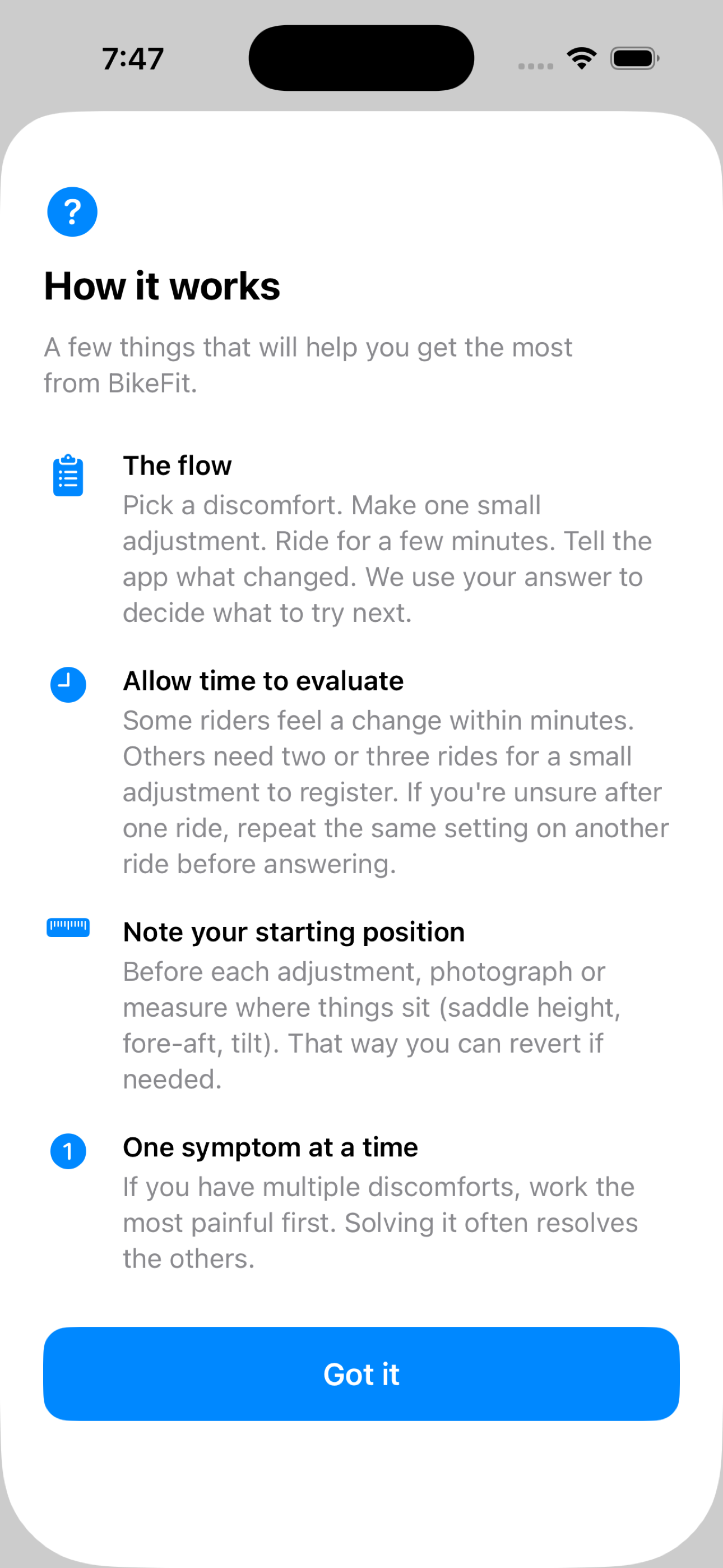
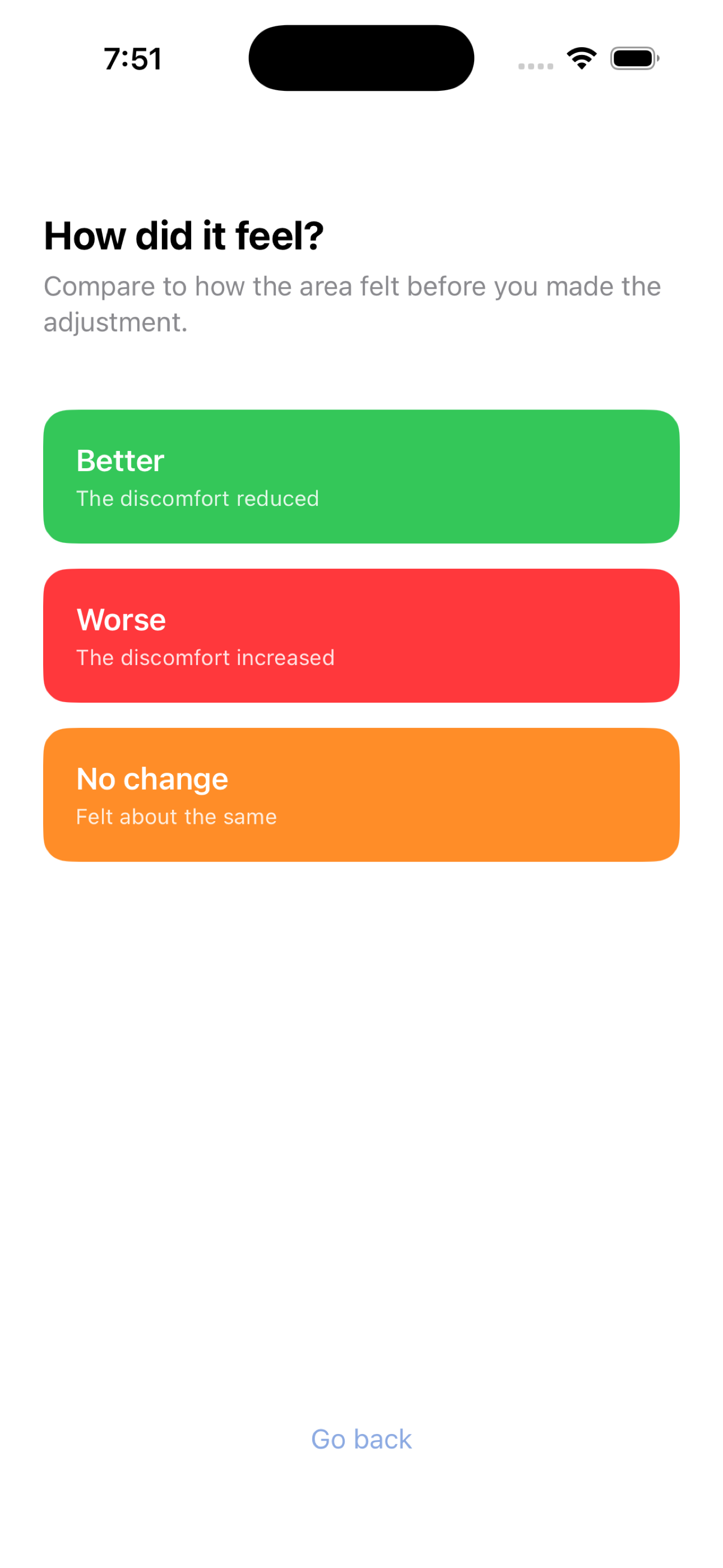
BikeFit takes the opposite approach. The cyclist reports a discomfort. The app prescribes a sequence of small adjustments, each with a biomechanical reason and brief instructions on which bolt to loosen. After a 10-to-20-minute test ride, the cyclist reports back: better, no change, or worse. The app routes the next adjustment based on the answer.
The result is a $4.99 iOS app that produces the same first-pass adjustments a fitter would try, in the same order, without the $200-to-$500 fee. When its options are exhausted, the app says so and recommends a professional. Honest by design.
Key facts
What makes it different
- Symptom-driven, not measurement-driven. No video setup, no body-landmark markers, no tripod. The cyclist tells the app what hurts; the app prescribes adjustments to try.
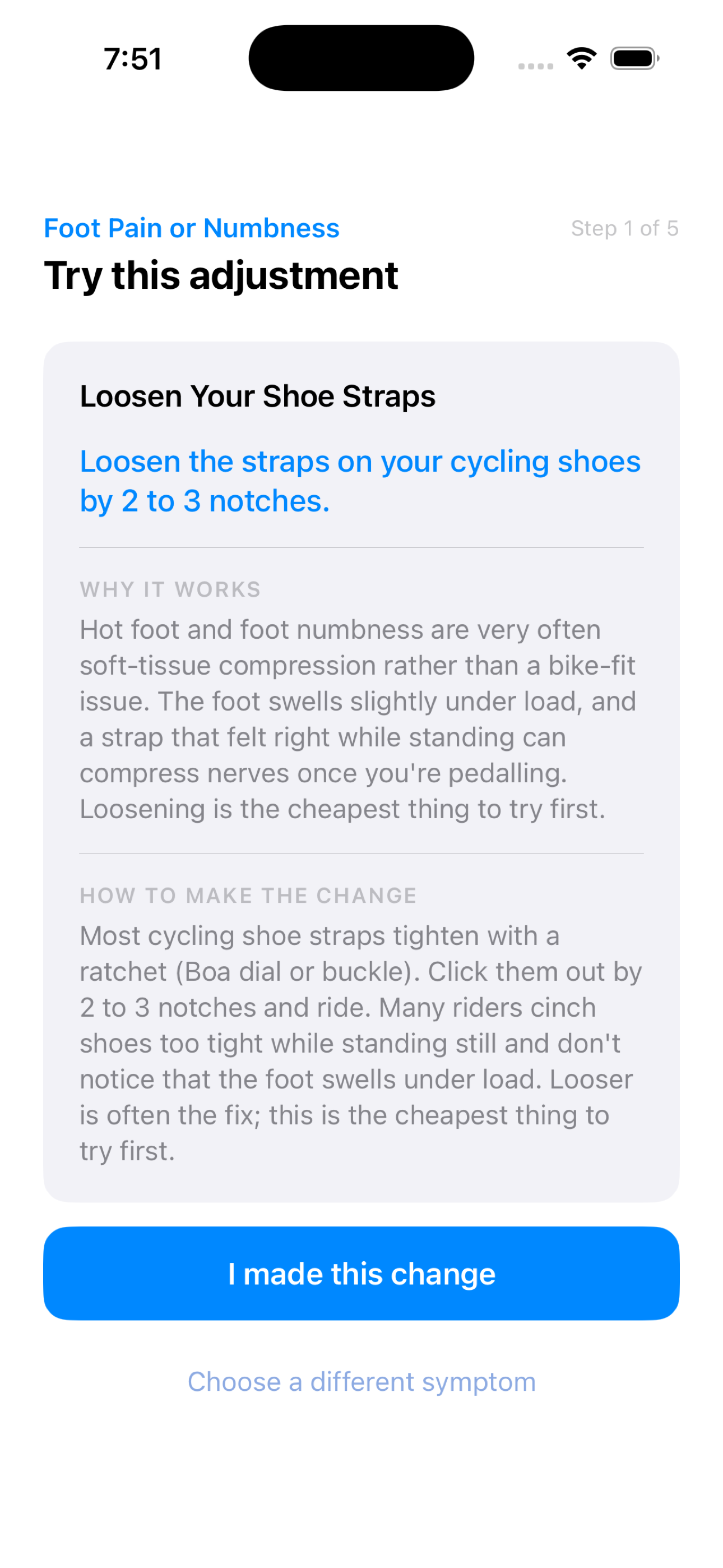
- Each adjustment ships with the biomechanical reason and the physical how-to. Not just "raise your saddle 3 mm" but the paragraph explaining why low saddle height forces excessive knee flexion at the bottom of the pedal stroke, plus brief instructions on which bolt to loosen and how to do it without overshooting.
- Adaptive routing. If an adjustment makes things worse, the app skips ahead to a different axis or direction. It never repeats the same change in the same direction it just tried.
- Honest about its limits. When the five-step sequence is exhausted without improvement, the app tells the user so and recommends a professional fitter or healthcare provider.
- $4.99 one-time vs. $20–$100/year competitors. Sustainable pricing for a tool a cyclist might use a few times a year.
About the developer
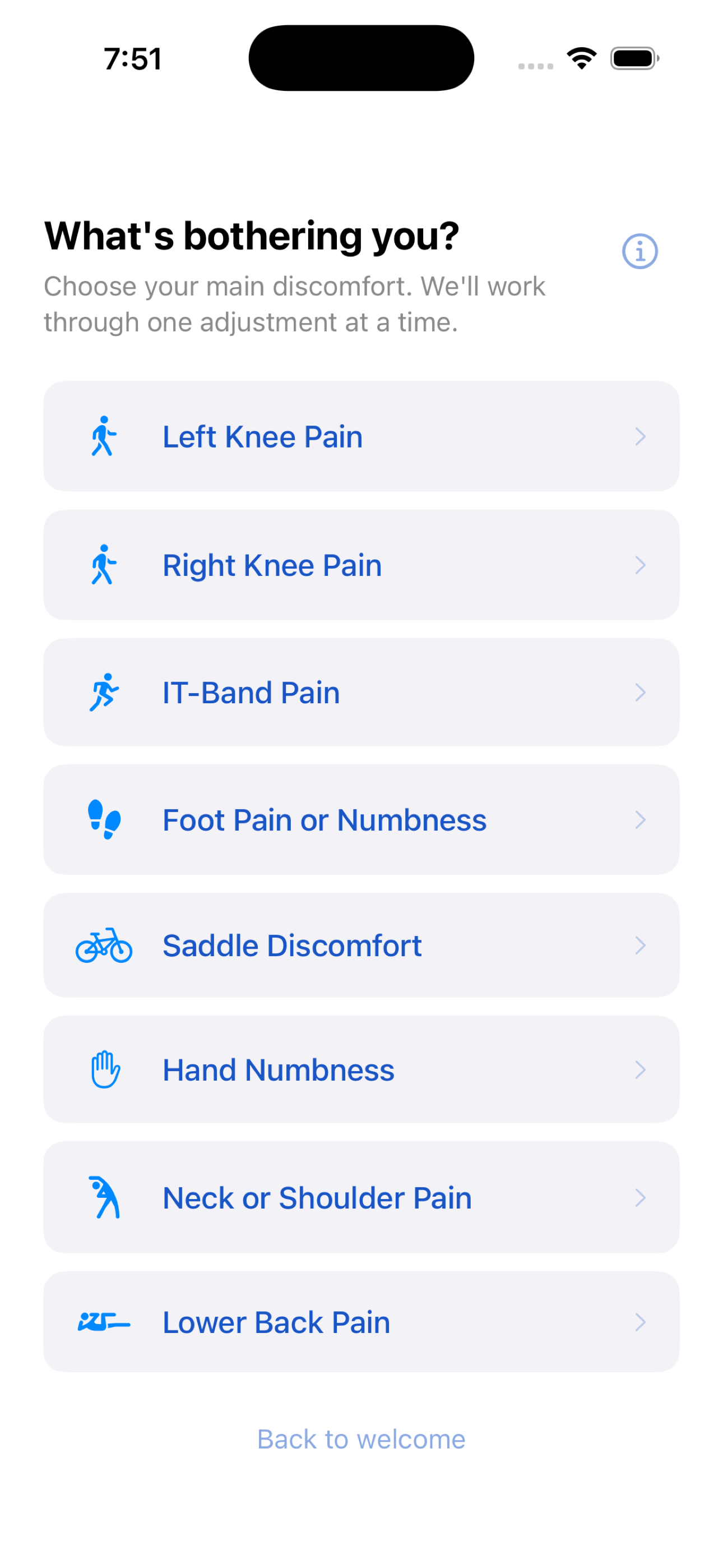
Dan Case is a cyclist who learned bike-fit the expensive way: years of recurring discomfort, multiple sessions with professional fitters, and slow pattern-recognition about what they actually do first when something hurts. BikeFit is the app he wished existed when he started. The eight symptom flows in the app are the same adjustments fitters reach for first, in the same order, with the biomechanical reason each one works and brief instructions on how to make it.
Dan is also the author of two books on enterprise AI: The Discipline Advantage: Why Some Organizations Win with AI — and Most Just Spend and The Operating Advantage: How to Run AI Inside Your Business. He lives in Austin, Texas. More at dancase.us.
Brand assets
App icon, in four formats. Right-click any to save, or use the download links.



App Store screenshots
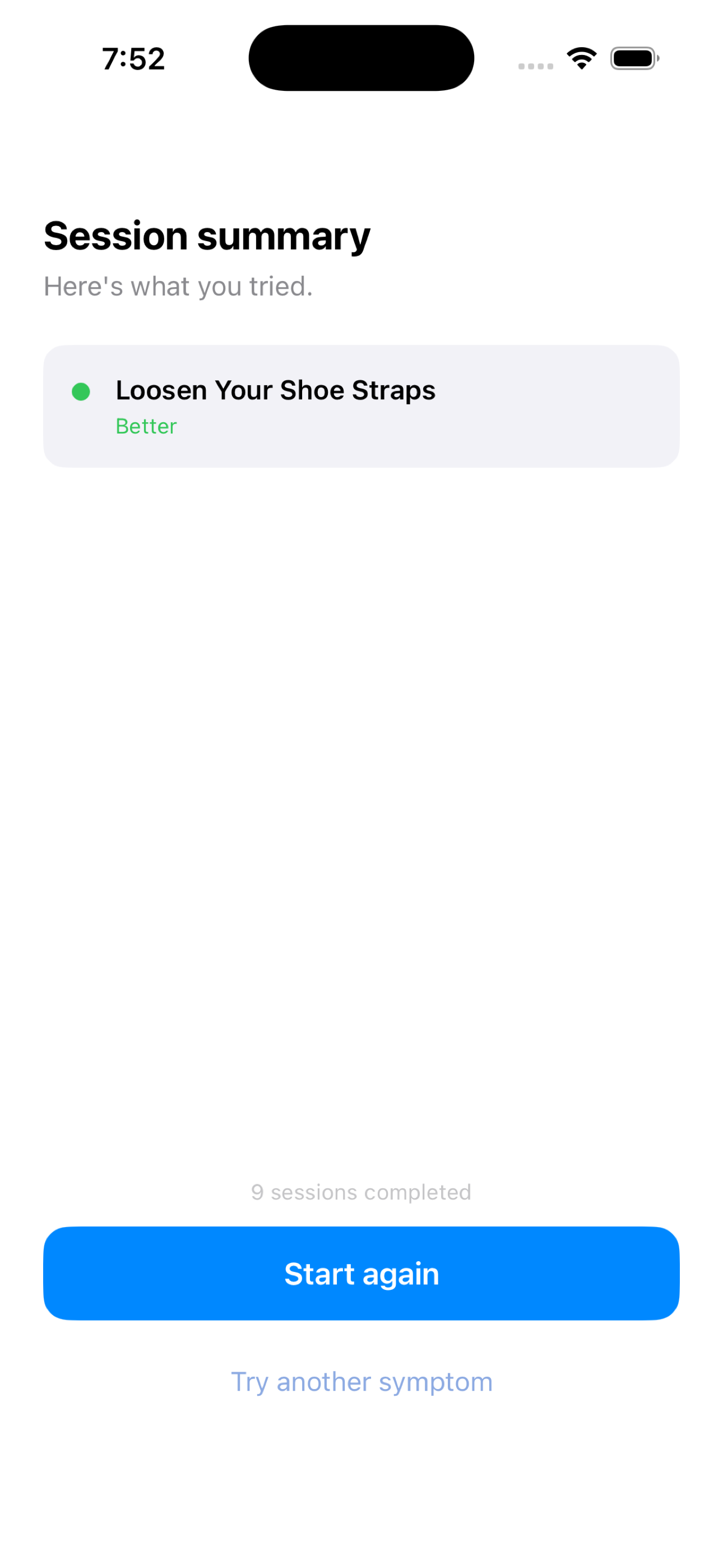
Six launch screenshots walking through one complete BikeFit flow (foot pain). Each screenshot was captured at iPhone 6.7" resolution (1290 × 2796). Right-click any thumbnail to save the web version, or download the full-resolution PNGs via the links below for print use.

Writing a launch piece and need additional captures? Email bikefit@dancase.us.
Boilerplate
Use this as a drop-in description in articles, podcast intros, or sponsor copy:
Press contact
Email: bikefit@dancase.us
Author: Dan Case, Austin, Texas
LinkedIn: linkedin.com/in/dancase1
For podcast appearances, interview requests, or contributed articles: same email. Topics Dan can speak on include bike fit as a systematic-decision-making problem, building a niche iOS app as a side project, and the pattern of organizational failures behind enterprise AI initiatives.
Last updated: 2026-05-04